
Introduction to the Future of Wearable Technology
The future of wearable technology is reshaping the way we live, work, and interact with the world. Once limited to simple fitness trackers, wearable devices have evolved into highly sophisticated tools capable of monitoring health, enhancing productivity, enabling immersive experiences, and even integrating with smart cities and connected environments. This transformation is driven by rapid advancements in sensors, artificial intelligence (AI), connectivity, and material science, creating devices that are more intelligent, accurate, and user-friendly than ever before.
Wearable technology encompasses smartwatches, fitness trackers, smart clothing, AR/VR headsets, medical devices, and even smart jewelry. These devices are no longer just gadgets; they are data-driven platforms that empower users to monitor health metrics, track daily activities, and make informed lifestyle decisions. For example, Apple Watch and Fitbit provide continuous heart rate monitoring, sleep tracking, and activity analysis, while new smart fabrics can monitor posture, stress levels, and body temperature in real time.http://futuretechfrontier.com
Why wearable technology matters today:
- Health Monitoring: Wearables detect early signs of health issues, helping users manage chronic conditions or prevent illness.
- Enhanced Productivity: Devices such as smart glasses provide real-time notifications, hands-free information, and augmented reality assistance for professional tasks.
- Immersive Experiences: AR and VR wearables transform gaming, education, and workplace training with interactive digital environments.
- Data-Driven Insights: Advanced analytics powered by AI turn raw data into actionable recommendations for health, fitness, and lifestyle improvement.
Fact: According to a report by Statista, the global wearable technology market is projected to reach $265 billion by 2026, reflecting growing consumer demand and innovation in smart devices.
In this comprehensive guide, we will explore the types of wearable technology, key technologies driving the industry, applications across sectors, market trends, benefits, challenges, and emerging future trends, providing a complete picture of how the future of wearable technology will impact our lives in the coming years.
Key Types of Wearable Technology
Wearable technology has diversified significantly over the past decade, moving far beyond simple fitness trackers. The future of wearable technology is marked by devices that are smarter, more integrated, and tailored to individual needs. Understanding the different types of wearables is essential for anyone looking to explore their potential applications and benefits.
Smartwatches and Fitness Trackers
Smartwatches and fitness trackers remain the most popular form of wearable technology. These devices track a wide range of metrics, including heart rate, sleep patterns, physical activity, and even stress levels. Modern smartwatches also integrate AI-driven insights to provide personalized recommendations and alert users to potential health issues.
Key features include:
- Real-time heart rate monitoring and ECG analysis
- Step counting, calories burned, and fitness goal tracking
- Sleep cycle monitoring for improved rest and recovery
- Smartphone notifications and mobile app integration
Case Study: The Apple Watch Series 9 can detect irregular heart rhythms and notify users of potential atrial fibrillation. Fitbit devices have been used in clinical studies to reduce obesity and improve cardiovascular health, showing the practical health benefits of wearable technology.
Smart Clothing and E-Textiles
Smart clothing, also called e-textiles, embeds sensors directly into fabrics to monitor physiological metrics like movement, posture, temperature, and muscle activity. These wearables are particularly useful in sports performance, workplace safety, and healthcare monitoring.
Applications:
- Monitoring athlete performance and recovery
- Detecting posture or fatigue in industrial workers
- Tracking biometric data for elderly or patients with chronic illnesses
Example: Hexoskin smart shirts provide continuous heart rate, breathing, and activity tracking, offering athletes and medical professionals detailed insights into physical performance.
AR/VR Wearables
Augmented Reality (AR) and Virtual Reality (VR) wearables are transforming how users interact with digital information. AR glasses overlay digital information onto the real world, while VR headsets create fully immersive environments.
Key uses:
- Training simulations for professionals in aviation, medicine, and manufacturing
- Gaming and entertainment for immersive experiences
- Education and virtual classrooms for interactive learning
Impact: AR wearables, like Microsoft HoloLens, have enabled engineers to visualize complex machinery in 3D, improving efficiency and reducing errors. VR wearables are used in therapy to treat PTSD and phobias, demonstrating healthcare applications beyond fitness tracking.
Medical and Health Wearables
Medical wearables represent a rapidly growing segment of the future of wearable technology, focusing on continuous health monitoring and disease management. These devices track vital signs, glucose levels, blood pressure, and other biomarkers, often transmitting data directly to healthcare providers.
Applications include:
- Continuous glucose monitors for diabetes management
- Blood pressure and heart rate monitors for cardiac patients
- Wearables integrated with telemedicine platforms for remote consultations
Example: Dexcom G6 allows diabetes patients to monitor glucose levels in real time, with data shared directly with healthcare providers for better treatment decisions.
Emerging and Niche Wearables
Beyond the mainstream devices, emerging wearables are gaining traction in specialized areas:
- Smart rings for biometric monitoring and contactless payments
- Wearable hearing aids with AI-driven sound enhancement
- Exoskeletons for workplace support or rehabilitation
- Smart jewelry that tracks health metrics while maintaining style
Trend Insight: The next decade of wearable technology will see these devices becoming smaller, smarter, and more seamlessly integrated into daily life, expanding beyond traditional watches and fitness trackers.
Key Technologies Driving the Future of Wearable Technology
The future of wearable technology is powered by a combination of advanced sensors, artificial intelligence, connectivity, and innovative materials. These technologies allow wearables to be smarter, more accurate, and seamlessly integrated into our daily lives. Understanding these technologies provides insight into why wearable devices are evolving so rapidly and how they will continue to transform health, productivity, and lifestyle.
Sensors and Biometric Monitoring
At the core of wearable devices are sensors that track physiological and environmental data. Modern wearables use advanced sensors to measure heart rate, blood oxygen, motion, temperature, and even sweat composition.
Key points:
- Continuous monitoring provides real-time insights into health and fitness.
- Multi-sensor integration allows devices to detect patterns and predict potential health issues.
- Emerging sensors can monitor stress levels, hydration, and posture, offering a more holistic view of wellbeing.
Example: The Whoop Strap 4.0 uses multiple biometric sensors to provide detailed recovery and strain analytics for athletes, helping prevent injury and optimize performance.
Artificial Intelligence and Data Analytics
Artificial Intelligence (AI) is a game-changer for wearable technology. AI algorithms analyze data collected from sensors to deliver personalized insights and predictive recommendations.
Applications include:
- Predictive health alerts for abnormal heart rhythms or sleep patterns
- Activity and fitness coaching tailored to the user’s habits
- Data-driven recommendations for diet, stress management, and lifestyle optimization
Case Study: Fitbit’s AI-powered platform provides personalized coaching and weekly health summaries, helping users improve fitness outcomes by 20-30% over traditional self-tracking methods.
Connectivity: 5G, Bluetooth, and IoT Integration
Wearables rely heavily on connectivity to transmit data in real time. High-speed connections like 5G and reliable Bluetooth allow devices to synchronize with smartphones, cloud platforms, and other IoT-enabled devices.
Key advantages:
- Real-time health alerts for emergencies
- Seamless integration with smart home devices and health platforms
- Support for connected ecosystems, like AR/VR experiences and workplace productivity tools
Trend: As 5G becomes widely adopted, wearables will support richer data streams, including live video, advanced AR applications, and real-time biometric monitoring.
Battery Life and Energy Efficiency
Battery life remains a critical challenge for wearables. The future of wearable technology emphasizes energy-efficient sensors, low-power processors, and innovative charging solutions.
Innovations include:
- Long-lasting rechargeable batteries for continuous monitoring
- Solar-powered wearables that harvest energy from sunlight
- Low-energy communication protocols to reduce power consumption
Example: Garmin’s solar-powered smartwatches extend battery life significantly for athletes and outdoor enthusiasts, combining convenience with sustainability.
Miniaturization and Material Innovation
Advancements in material science and miniaturization are making wearables smaller, lighter, and more flexible. Flexible circuits, lightweight polymers, and stretchable sensors allow devices to integrate seamlessly into clothing, jewelry, or even the skin.
Benefits:
- Comfortable and unobtrusive wear for all-day use
- Enhanced durability and water resistance
- Potential for invisible wearable devices embedded in clothing or accessories
Example: Companies like OMsignal and Hexoskin are developing smart shirts with embedded sensors that monitor heart rate, breathing, and movement, combining comfort with high-tech functionality.
Applications of Wearable Technology
The future of wearable technology extends far beyond simply counting steps or tracking sleep. Modern wearable devices are transforming healthcare, fitness, workplace productivity, entertainment, and specialized industries, making them integral to everyday life. Understanding the applications helps us see how wearables are shaping the way we live, work, and interact with technology.
Personal Health and Fitness
One of the most widespread applications of wearable technology is health and fitness tracking. Devices such as smartwatches, fitness bands, and biometric clothing monitor vital signs, physical activity, and wellness metrics.
Key uses include:
- Heart rate monitoring and ECG analysis to detect irregularities
- Sleep tracking to improve rest and recovery
- Step counting and calorie tracking for daily fitness goals
- Stress management and mindfulness reminders
Case Study: The Apple Watch can detect irregular heart rhythms and even atrial fibrillation. Clinical studies have shown that such wearables can help users reduce health risks by detecting early warning signs that might otherwise go unnoticed.
Workplace and Productivity
Wearables are increasingly used to enhance workplace efficiency and safety. Smart glasses, wearable scanners, and biometric monitoring devices provide real-time insights that improve workflow, reduce errors, and protect employees.
Applications include:
- Industrial safety: Sensors detect fatigue or unsafe movements in workers
- Remote assistance: AR smart glasses provide hands-free guidance from remote experts
- Time and task tracking: Wearables optimize schedules and workflow
Example: Companies like Honeywell use wearable sensors in factories to monitor employee movements and ensure safety protocols are followed, significantly reducing workplace accidents.
Entertainment and Lifestyle
Wearables are revolutionizing entertainment and lifestyle experiences. From AR/VR headsets for immersive gaming to smart jewelry for fashion tech, these devices enhance how we interact with digital content.
Key trends:
- AR/VR gaming for fully immersive experiences
- Smart audio devices for enhanced music and media interaction
- Fashion-integrated wearables that combine style with functionality
Example: The Oculus Quest 3 provides VR gaming experiences where wearables track movement and gestures for a realistic, interactive environment.
Healthcare and Telemedicine
Medical wearables are a cornerstone of the future of wearable technology, enabling continuous health monitoring, remote diagnostics, and integration with healthcare providers.
Key applications include:
- Continuous glucose monitors for diabetes management
- Blood pressure and cardiac monitors for heart health
- Remote patient monitoring connected to hospitals and telehealth services
Impact: Telemedicine platforms integrated with wearable devices allow doctors to monitor patients in real time, reducing hospital visits and improving patient outcomes.
Military and Specialized Uses
Wearable technology also finds applications in military, security, and specialized industries. These devices provide enhanced safety, communication, and operational efficiency.
Applications include:
- Navigation and communication devices for soldiers in the field
- Health monitoring sensors to track vital signs during operations
- Exoskeletons to enhance physical performance and reduce injury
Example: The U.S. Army uses wearable devices to monitor soldiers’ heart rate, temperature, and location, improving both safety and mission effectiveness.
Benefits of Wearable Technology
The future of wearable technology is not just about devices—it’s about the value they provide to users, healthcare systems, workplaces, and society as a whole. Wearables are transforming health, productivity, safety, and lifestyle by providing real-time insights and actionable data. Understanding the benefits helps explain why adoption is growing so rapidly across industries.
1. Enhanced Health Monitoring and Early Detection
Wearables offer continuous monitoring of vital signs, activity levels, and other biometric data. This enables early detection of potential health issues and empowers users to take proactive measures.
Benefits include:
- Detection of irregular heart rhythms, sleep disorders, and high stress levels
- Real-time alerts for medical emergencies
- Tracking of chronic conditions like diabetes, hypertension, and cardiovascular diseases
Case Study: Studies have shown that Apple Watch notifications for atrial fibrillation have led to early medical consultations, potentially preventing strokes in at-risk users.
2. Increased Productivity and Efficiency
Wearables enhance productivity by streamlining workflows and providing real-time access to information. Employees in industries like logistics, manufacturing, and healthcare can use wearables to improve performance and reduce errors.
Examples of productivity benefits:
- Smart glasses provide hands-free access to instructions and data
- Wearable devices track employee movement and fatigue, optimizing schedules
- Notifications and reminders help users stay focused and organized
Impact: Companies implementing wearables for workforce monitoring report up to 15-20% efficiency gains in operations.
3. Personalized User Experience
One of the most compelling benefits of wearable technology is personalization. AI-powered wearables analyze user data to provide customized recommendations and insights.
Key applications:
- Personalized fitness and diet plans
- Customized sleep and stress management programs
- Adaptive notifications based on user behavior and preferences
Example: Fitbit Premium uses AI algorithms to generate weekly health insights tailored to the individual, helping users meet fitness goals more effectively.
4. Safety and Security Improvements
Wearable devices enhance safety for both individuals and employees in high-risk environments.
Applications include:
- Fall detection for the elderly, triggering emergency alerts
- Biometric monitoring for athletes or workers in hazardous conditions
- Location tracking for personal safety and emergency response
Fact: The wearable safety market, including emergency alert devices, is expected to grow by over 15% annually, driven by demand from healthcare and industrial sectors.
5. Data-Driven Decision Making
Wearables collect and analyze massive amounts of data, enabling data-driven decisions for individuals, healthcare providers, and organizations.
Benefits:
- Health insights guide lifestyle changes and medical interventions
- Companies use wearable data to improve workflows and safety protocols
- Researchers leverage aggregate wearable data for population health studies
Example: Smartwatches and fitness trackers provide anonymized data to research organizations, helping track trends in heart rate, activity, and sleep patterns across large populations.
Challenges and Risks of Wearable Technology
While the future of wearable technology promises significant benefits, it is not without challenges and risks. Users, manufacturers, and organizations must carefully navigate these issues to ensure wearables are safe, reliable, and effective. Understanding the challenges helps in making informed decisions about adoption, design, and usage.
1. Privacy and Data Security Concerns
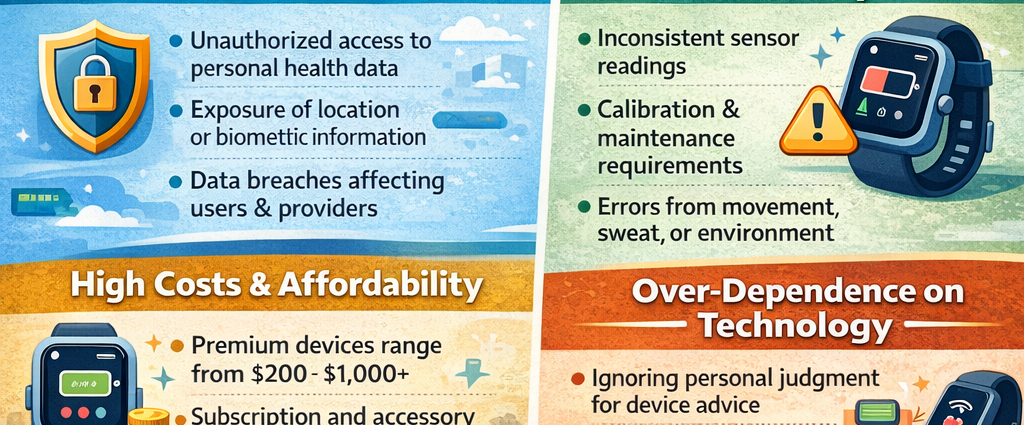
Wearables collect vast amounts of personal and sensitive data, including heart rate, location, sleep patterns, and medical information. Without robust protections, this data can be misused, stolen, or hacked.
Risks include:
- Unauthorized access to personal health data
- Exposure of location or biometric information to third parties
- Data breaches affecting both individuals and healthcare providers
Example: In 2022, researchers discovered vulnerabilities in several wearable devices that could allow hackers to access sensitive health data, highlighting the need for strong encryption and secure cloud platforms.
Best Practice: Users should choose wearables with transparent privacy policies, strong authentication, and secure data transmission.
2. Device Reliability and Accuracy
The accuracy of sensors in wearable devices is critical for meaningful insights. However, some devices may provide inconsistent readings, leading to misinformed decisions or missed health alerts.
Challenges:
- Sensor errors due to movement, sweat, or environmental conditions
- Inconsistent performance across different users or body types
- Calibration and maintenance requirements to ensure accurate data
Fact: A 2021 study in the Journal of Medical Internet Research found that consumer-grade wearables vary in accuracy for heart rate and sleep tracking, emphasizing the importance of reliable devices in health-critical applications.
3. High Costs and Affordability
Cutting-edge wearable devices can be expensive, limiting access for some consumers. High costs may also slow adoption in emerging markets or among budget-conscious users.
Considerations:
- Premium smartwatches, AR glasses, and medical wearables can range from $200 to over $1,000
- Regular updates, subscriptions for AI analytics, and app ecosystems can add ongoing expenses
- Affordability affects equitable access to health and productivity benefits
Trend: As technology matures and production scales, prices are expected to decrease, making wearables more accessible to a wider audience.
4. Over-Dependence on Technology
Relying too heavily on wearable devices may lead to behavioral dependence and reduced personal awareness. Users may become overly reliant on devices for health guidance, fitness motivation, or productivity reminders.
Potential Issues:
- Ignoring personal judgment in favor of device recommendations
- Anxiety or stress from constant monitoring or notifications
- Reduced motivation to engage in health and fitness activities without a device
Tip: Wearables should be used as supportive tools rather than replacements for personal judgment, professional advice, or healthy habits.
5. Regulatory and Ethical Challenges
The wearable technology industry faces regulatory scrutiny, especially for medical and health-focused devices. Compliance with laws, certifications, and ethical guidelines is essential to protect users.
Examples:
- Medical wearables must meet FDA or CE standards for accuracy and safety
- Data handling must comply with HIPAA, GDPR, or other privacy regulations
- Ethical concerns arise around workplace monitoring and surveillance
Comments are closed, but trackbacks and pingbacks are open.