What is the Internet of Things (IoT)?
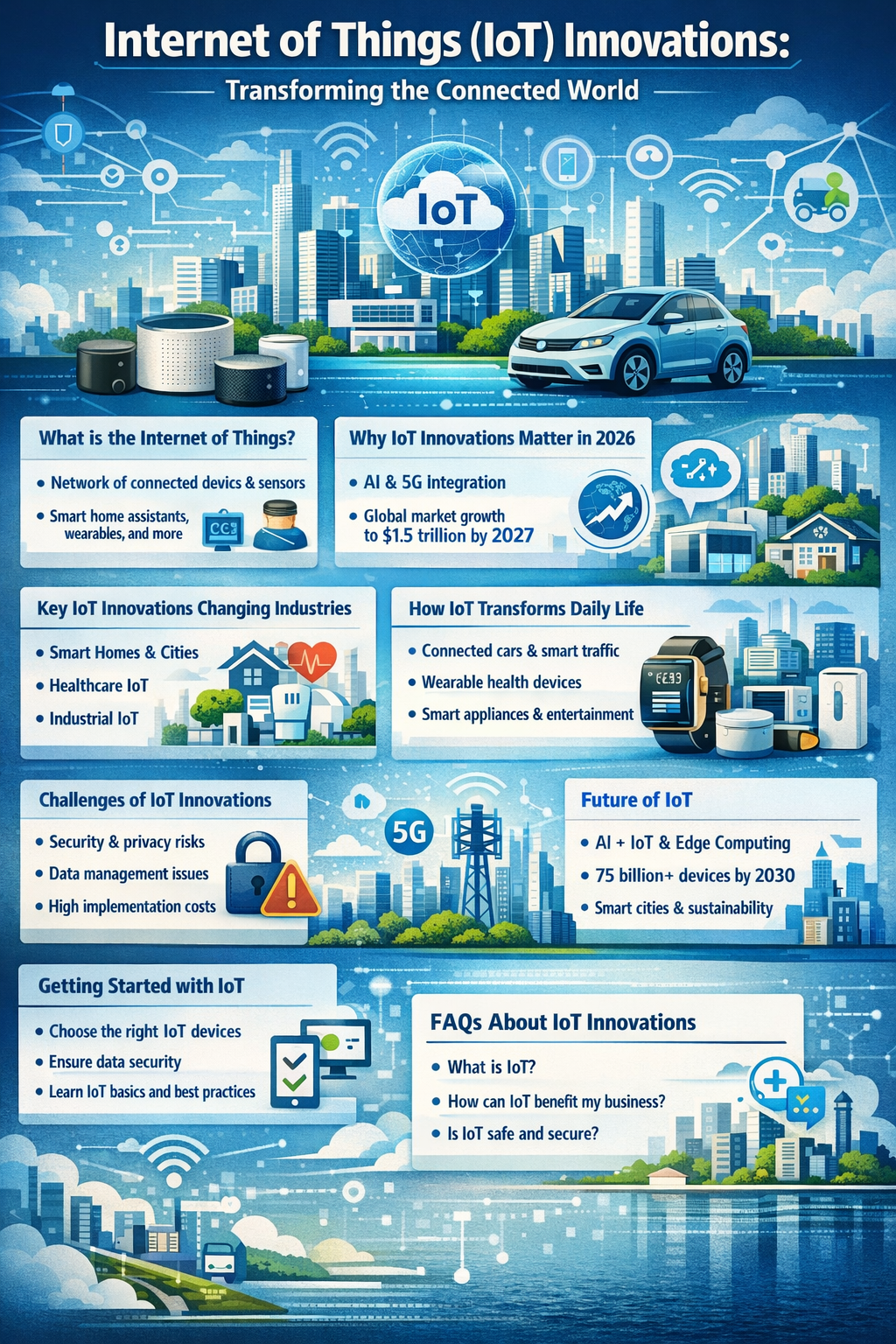
The Internet of Things (IoT) innovations are reshaping the way we interact with technology, making devices smarter, more connected, and more efficient. But what exactly is IoT? At its core, the Internet of Things (IoT) refers to a network of physical devices—ranging from everyday household gadgets to sophisticated industrial machinery—that are connected to the internet and can collect, exchange, and process data. These devices are equipped with sensors, software, and communication technologies that allow them to interact with each other and with users, creating a seamless ecosystem of connected technology.
How IoT Works:
IoT devices rely on a combination of sensors, connectivity, data processing, and user interfaces. For example, a smart thermostat uses temperature sensors to detect changes in room conditions, communicates with a central IoT platform via Wi-Fi, and adjusts the heating system accordingly. Similarly, wearable fitness trackers monitor heart rate, sleep patterns, and activity levels, sending real-time data to a mobile app for analysis.http://futuretechfrontier.com
Key Components of IoT Systems:
- Sensors & Actuators – Collect data from the environment (temperature, motion, humidity).
- Connectivity – Transfers data through networks like Wi-Fi, Bluetooth, 5G, or LPWAN.
- Data Processing – Analyzes and interprets data either on the device (edge computing) or on cloud platforms.
- User Interface – Provides actionable insights to users through apps, dashboards, or notifications.
Examples of Everyday IoT Devices:
- Smart home assistants like Amazon Alexa or Google Nest.
- Wearable fitness devices like Fitbit and Apple Watch.
- Connected security cameras and smart locks.
- Smart appliances like refrigerators, washing machines, and thermostats.
- Industrial IoT sensors for monitoring machinery and energy usage.
IoT is not just about convenience—it’s about making systems more intelligent, predictive, and efficient. From smart homes to industrial applications, IoT innovations are the backbone of a connected, data-driven world.
Why IoT Innovations Matter in 2026
The landscape of technology is evolving rapidly, and Internet of Things (IoT) innovations are at the forefront of this transformation. In 2026, IoT is not just a futuristic concept—it’s a driving force behind smarter homes, more efficient businesses, and connected cities. The adoption of IoT solutions is accelerating because organizations and individuals are recognizing the enormous benefits of a connected ecosystem.
Current Trends in IoT Technology
Several trends are shaping the way IoT is implemented today:
- AI and Machine Learning Integration – IoT devices are now capable of learning from the data they collect. AI-powered analytics can predict maintenance needs, optimize energy usage, and even anticipate user behavior.
- Edge Computing – Moving processing closer to devices reduces latency and enhances real-time decision-making, which is essential for applications like autonomous vehicles or industrial machinery.
- 5G Connectivity – The rollout of 5G networks allows IoT devices to transfer data faster, more reliably, and over greater distances, enabling applications that were previously impractical.
- IoT Security Enhancements – With cybersecurity risks growing, innovations like blockchain-based authentication, advanced encryption, and anomaly detection are making IoT more secure.
Benefits of IoT Innovations for Businesses and Consumers
For Businesses:
- Operational Efficiency: IoT devices monitor equipment, track inventory, and manage supply chains, reducing downtime and waste.
- Data-Driven Decision Making: Businesses can collect actionable insights from IoT data to optimize production, marketing, and customer engagement.
- Cost Savings: Predictive maintenance and energy management systems help reduce unnecessary expenses.
For Consumers:
- Convenience: Smart homes simplify daily routines—thermostats adjust automatically, refrigerators track groceries, and security systems monitor homes remotely.
- Health and Well-being: Wearable IoT devices provide real-time health insights, helping users manage fitness, chronic conditions, and sleep.
- Personalized Experiences: Connected devices offer customized recommendations and services, from entertainment platforms to smart retail shopping experiences.
Global Market Growth and Future Outlook
According to a 2025 report by Statista, the IoT market is projected to exceed $1.5 trillion by 2027, driven by rapid adoption across healthcare, manufacturing, and consumer electronics. Analysts expect over 50 billion connected devices worldwide by 2030, highlighting the growing role of IoT innovations in shaping everyday life.
Case Study:
In the industrial sector, General Electric (GE) uses IoT sensors in its jet engines and turbines to monitor performance in real time. This predictive maintenance reduces unexpected failures by up to 30%, saving millions in operational costs annually.
In 2026, IoT innovations are no longer optional—they are essential for companies and consumers looking to leverage data, automation, and connectivity to stay competitive and improve quality of life.
Key IoT Innovations Changing Industries
Internet of Things (IoT) innovations are not limited to smart homes or wearable devices—they are revolutionizing entire industries. From manufacturing and healthcare to agriculture and urban infrastructure, IoT is driving efficiency, innovation, and connectivity like never before.
Smart Homes and Connected Living
Smart homes are the most visible example of IoT innovations for everyday users. Devices like smart thermostats, lighting systems, voice assistants, and security cameras work together to create a connected living environment.
- Energy Efficiency: Smart thermostats (like Nest) learn user patterns to reduce energy usage, lowering electricity bills by up to 15% annually.
- Security: IoT-enabled cameras and locks allow homeowners to monitor and secure properties remotely via mobile apps.
- Convenience: Voice assistants such as Amazon Alexa or Google Home automate daily tasks, from controlling appliances to providing reminders.
Industrial IoT (IIoT) for Manufacturing
Industrial IoT, or IIoT, is transforming manufacturing and production processes:
- Predictive Maintenance: Sensors monitor machinery in real-time, predicting failures before they occur and reducing downtime.
- Supply Chain Optimization: IoT tracks raw materials, inventory levels, and shipment progress, enabling better planning and efficiency.
- Automation: Connected machines communicate with each other to optimize production lines, reducing human error and costs.
Case Study: Siemens implemented IIoT solutions in its factories and reported a 20% increase in production efficiency and a significant reduction in operational downtime.
Healthcare IoT Innovations
Healthcare is one of the fastest-growing sectors for IoT adoption:
- Remote Patient Monitoring: Devices track vital signs, glucose levels, and heart rates, transmitting data directly to doctors.
- Wearable Health Devices: Smartwatches and fitness trackers help monitor physical activity and sleep patterns.
- Smart Medical Equipment: Connected devices in hospitals streamline patient care, track equipment usage, and manage inventory.
Impact: According to a report by MarketsandMarkets, the IoT healthcare market is projected to reach $534 billion by 2026, driven by remote monitoring and AI-enabled diagnostics.
Smart Cities and Urban IoT
IoT innovations are creating smart cities, improving quality of life and sustainability:
- Traffic Management: IoT-enabled traffic lights reduce congestion by analyzing traffic flow in real-time.
- Energy Management: Smart grids and connected streetlights optimize energy usage, saving cities millions annually.
- Waste Management: Sensors in waste bins notify collection services when full, improving efficiency.
Example: Barcelona’s smart city project uses IoT sensors for parking management, lighting, and waste collection, reducing operational costs by up to 30%.
Agriculture and IoT Farming Solutions
IoT is transforming agriculture by enabling precision farming:
- Soil and Crop Monitoring: Sensors provide real-time data on soil moisture, temperature, and nutrient levels.
- Smart Irrigation: Automated watering systems reduce water usage while maximizing crop yield.
- Livestock Tracking: Connected collars monitor the health and location of farm animals, improving productivity and animal welfare.
Fact: Precision agriculture powered by IoT can increase crop yields by 20–25% while reducing resource wastage.
How IoT Innovations are Transforming Everyday Life
Internet of Things (IoT) innovations are not only reshaping industries—they are changing how we live, work, and interact with technology on a daily basis. From our homes to healthcare, transportation, and entertainment, IoT devices create a connected, intelligent ecosystem that makes life more convenient, efficient, and personalized.
IoT in Homes: Convenience, Safety, and Energy Efficiency
Smart home technology has become one of the most visible examples of IoT innovations for consumers:
- Convenience: Devices like smart assistants (Amazon Alexa, Google Home) allow users to control lights, appliances, and entertainment systems with voice commands.
- Energy Efficiency: Smart thermostats and connected lighting systems automatically adjust based on occupancy and time of day, reducing energy bills by up to 15–20% annually.
- Security: IoT-enabled cameras, doorbells, and locks provide real-time monitoring and alerts, giving homeowners peace of mind even when away.
IoT in Transportation: Connected Vehicles and Smart Traffic
The automotive sector is rapidly adopting IoT technologies:
- Connected Vehicles: Cars equipped with IoT sensors can communicate with each other, road infrastructure, and traffic management systems to improve safety and efficiency.
- Fleet Management: Businesses track vehicles in real-time, optimizing routes, reducing fuel consumption, and improving delivery times.
- Smart Traffic Systems: IoT-enabled traffic lights and monitoring systems reduce congestion and improve road safety by analyzing real-time traffic patterns.
Case Study: In Singapore, smart traffic management systems use IoT sensors to monitor road conditions and dynamically control traffic signals, reducing travel time by 20% in peak hours.
IoT in Healthcare: Real-Time Health Monitoring
Healthcare is increasingly benefiting from connected devices:
- Wearables: Fitness trackers and smartwatches monitor heart rate, sleep patterns, and physical activity, providing actionable insights to users.
- Remote Patient Monitoring: IoT devices can transmit critical health data to doctors, enabling timely interventions and reducing hospital visits.
- Medication Management: Smart pill dispensers remind patients to take medications on schedule, improving adherence and outcomes.
IoT in Retail: Personalized Customer Experience
Retail businesses leverage IoT innovations to enhance customer experience:
- Smart Shelves: Sensors detect inventory levels, automatically alerting staff to restock items.
- Personalized Recommendations: Connected devices track customer behavior to provide tailored promotions and suggestions.
- Seamless Checkout: IoT-enabled payment systems and RFID technology enable faster, frictionless purchases.
IoT in Entertainment: Smart Devices and Streaming
Entertainment is becoming more interactive thanks to IoT:
- Streaming Devices: Smart TVs and speakers adapt recommendations based on viewing patterns.
- Gaming: IoT-connected consoles and AR/VR devices create immersive, real-time experiences.
- Home Integration: Entertainment systems connect with lighting and smart speakers to create mood-based environments.
Fact: A survey by Statista revealed that over 55% of smart home users in 2025 actively use IoT devices to manage energy, security, and entertainment, highlighting the growing integration of IoT into daily life.
Challenges and Risks of IoT Innovations
While Internet of Things (IoT) innovations offer immense benefits, they also come with challenges and risks that businesses and consumers must address. Understanding these issues is crucial to safely and effectively adopting IoT technology.
Security and Privacy Concerns
One of the biggest risks associated with IoT is security:
- Data Breaches: IoT devices collect vast amounts of personal and operational data. If not secured, this data can be vulnerable to hackers.
- Unauthorized Access: Weak passwords, outdated firmware, or unsecured networks can allow attackers to control devices remotely.
- Privacy Risks: Many IoT devices, especially in smart homes and wearable health technology, track sensitive personal information. Mismanagement of this data can lead to privacy violations.
Fact: According to a 2025 report by McKinsey, over 30% of IoT devices are vulnerable to cyberattacks due to poor security practices.
Data Management and Interoperability Issues
IoT devices generate massive volumes of data that require proper handling:
- Data Overload: Collecting data is easy, but analyzing and making sense of it requires robust platforms.
- Interoperability Challenges: Many IoT devices use different standards and protocols, making it difficult to integrate devices from multiple manufacturers.
- Data Accuracy: Poor-quality or inconsistent data can lead to incorrect insights and faulty decisions.
High Costs of Implementation
Implementing IoT systems is often expensive, especially for businesses:
- Device Costs: High-quality sensors, devices, and gateways require significant upfront investment.
- Maintenance Costs: IoT systems require regular updates, security patches, and monitoring.
- Infrastructure Requirements: Reliable networks, cloud storage, and processing power add to the cost of IoT adoption.
Regulatory and Compliance Challenges
As IoT adoption grows, governments and organizations are implementing regulations to ensure safety and privacy:
- Data Protection Laws: GDPR, CCPA, and other regulations mandate strict handling of personal data collected by IoT devices.
- Industry-Specific Compliance: Healthcare (HIPAA) and industrial sectors require additional safeguards to ensure safe operation of connected devices.
- Legal Liability: Manufacturers and operators may face legal consequences if IoT devices malfunction or data is mishandled.
Takeaway: While IoT innovations bring incredible opportunities, addressing security, privacy, interoperability, costs, and regulatory compliance is essential. Organizations that proactively manage these challenges are more likely to reap the full benefits of IoT technology.
Future of IoT Innovations
The Internet of Things (IoT) innovations of today are just the beginning. Looking ahead, IoT is poised to reshape industries, cities, and everyday life in profound ways. With emerging technologies, new connectivity standards, and smarter devices, the future of IoT is brighter and more impactful than ever.
Emerging Trends: AI + IoT, Edge Computing, and 5G Integration
Several technological trends are driving the next wave of IoT innovations:
- AI-Enabled IoT Devices: Artificial intelligence enables devices to learn from data, predict behaviors, and make autonomous decisions. For example, AI-powered IoT in manufacturing can automatically optimize production schedules and detect anomalies.
- Edge Computing: Processing data closer to IoT devices reduces latency and improves real-time responsiveness, which is critical for autonomous vehicles, smart grids, and industrial automation.
- 5G Networks: The widespread adoption of 5G will allow IoT devices to communicate faster, more reliably, and with lower energy consumption. This opens doors for large-scale smart cities, connected transport, and remote healthcare solutions.
Predictions for IoT Market Growth by 2030
- The IoT market is expected to exceed $2.5 trillion by 2030, according to Statista.
- Connected devices are projected to surpass 75 billion globally, driving massive data creation and new business opportunities.
- IoT adoption in sectors like healthcare, agriculture, logistics, and energy will see exponential growth.
The Role of IoT in Sustainable Development
IoT innovations are not just about convenience—they also support sustainable living and environmental protection:
- Smart Energy Management: IoT-enabled grids and devices optimize electricity consumption, reducing carbon emissions.
- Precision Agriculture: IoT sensors monitor soil, water, and crop health, minimizing waste and increasing yield.
- Smart Cities: Connected infrastructure reduces traffic congestion, pollution, and resource wastage.
How IoT Will Shape Smart Cities and Connected Ecosystems
Future cities will rely heavily on IoT innovations:
- Transportation: Autonomous vehicles, real-time traffic monitoring, and connected public transport will improve mobility.
- Infrastructure: Smart streetlights, waste management systems, and energy-efficient buildings will enhance urban sustainability.
- Public Safety: IoT sensors will detect emergencies, monitor environmental hazards, and improve emergency response times.
Quote: “The IoT revolution is not just about connecting devices—it’s about connecting people, data, and systems to make the world smarter and more sustainable.” – Gartner, 2025
Takeaway: The future of IoT innovations promises smarter cities, safer environments, efficient industries, and personalized daily experiences. Early adopters of IoT technology stand to gain significant competitive and lifestyle advantages.
Comments are closed, but trackbacks and pingbacks are open.