
Introduction to Multiagent Systems
Multiagent systems are transforming industries by enabling intelligent collaboration between autonomous AI agents. These systems are designed to solve complex problems, automate workflows, and improve operational efficiency across multiple sectors. Businesses worldwide are increasingly investing in multiagent technologies to gain a competitive advantage in the digital economy.
Unlike traditional software systems, multiagent systems allow multiple intelligent agents to communicate, cooperate, and make decisions independently. This decentralized approach enables organizations to manage large-scale operations more effectively while reducing human intervention.
As artificial intelligence continues to evolve, multiagent systems are becoming essential in industries such as healthcare, finance, logistics, manufacturing, cybersecurity, and retail.
What Are Multiagent Systems?
A multiagent system is a network of intelligent agents that interact with each other to achieve specific goals. Each agent operates independently but collaborates with other agents when necessary.
Key Features of Multiagent Systems
Autonomous Decision-Making
Each AI agent can analyze situations and make decisions without constant human supervision.
Collaboration and Coordination
Agents work together to complete tasks efficiently and solve complex problems.
Real-Time Communication
The agents continuously exchange information to improve system performance.
Scalability
Organizations can easily expand the system by adding more agents.
How Multiagent Systems Work
Multiagent systems rely on artificial intelligence, machine learning, communication protocols, and distributed computing technologies to function effectively.
Agent Communication
Agents communicate through messaging systems or shared environments. This communication helps them coordinate actions and share information in real time.
Distributed Intelligence
Instead of relying on one centralized system, intelligence is distributed among multiple agents, improving flexibility and resilience.
Machine Learning Integration
Advanced systems use machine learning algorithms to improve decision-making and adapt to changing conditions.
Reinforcement Learning
Agents learn through rewards and feedback, enabling them to optimize their actions over time.
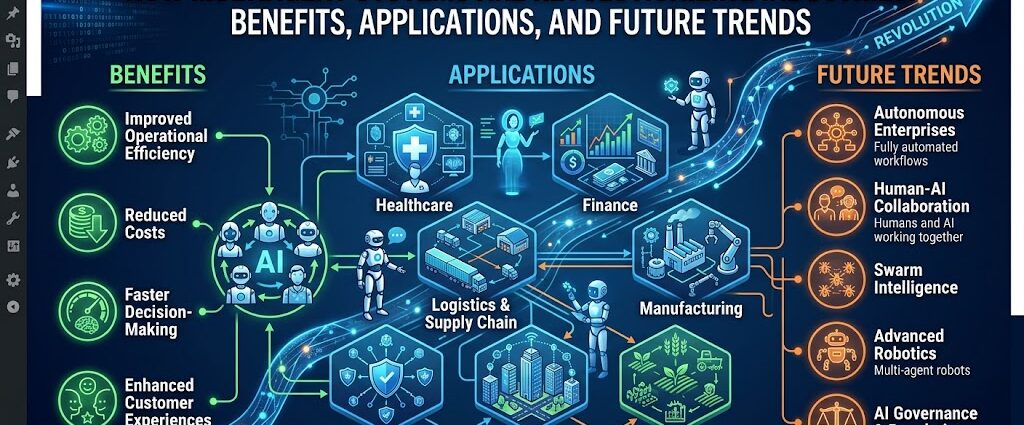
Benefits of Multiagent Systems in Modern Industries
Businesses are adopting multiagent systems because they provide significant operational and strategic advantages.
Improved Operational Efficiency
Tasks can be distributed among multiple agents, reducing processing times and improving productivity.
Faster Decision-Making
Agents analyze data and respond to changes in real time.
Reduced Costs
Automation lowers operational expenses and minimizes manual work.
Better Scalability
Organizations can manage larger operations more effectively.
Enhanced Customer Experiences
AI-powered agents provide personalized and faster services to customers.
How Multiagent Systems Are Revolutionizing Industries
Healthcare Industry Transformation
Healthcare is one of the industries experiencing major changes through multiagent systems.
AI-Powered Diagnostics
Multiple AI agents analyze medical reports, lab results, and imaging data simultaneously to improve diagnostic accuracy.
Smart Patient Monitoring
Connected devices continuously monitor patient health and alert medical staff when necessary.
Hospital Workflow Automation
AI agents manage appointments, medical records, and resource allocation efficiently.
Benefits in Healthcare
- Faster diagnosis
- Improved patient care
- Reduced administrative workload
- Better resource management
Manufacturing and Smart Factories
Manufacturing companies are using multiagent systems to build intelligent production environments.
Production Line Automation
AI agents coordinate robotic systems and manufacturing operations.
Predictive Maintenance
Agents monitor machinery and predict failures before breakdowns occur.
Quality Control Systems
Computer vision agents inspect products for defects in real time.
Benefits for Manufacturers
- Increased productivity
- Reduced downtime
- Lower operational costs
- Improved product quality
Financial Services and Banking
Banks and financial institutions are leveraging multiagent systems for smarter operations.
Fraud Detection Systems
AI agents monitor financial transactions and identify suspicious activities instantly.
Automated Trading Platforms
Agents analyze market trends and execute trades automatically.
Risk Management
Financial institutions use AI agents to evaluate investment risks and creditworthiness.
Benefits in Finance
- Enhanced security
- Faster transactions
- Improved financial forecasting
- Better customer experiences
Retail and E-Commerce
Retail businesses are using multiagent systems to improve customer engagement and increase sales.
Personalized Product Recommendations
AI agents analyze customer behavior to suggest relevant products.
Dynamic Pricing Strategies
Prices are adjusted automatically based on market demand and competitor analysis.
Virtual Shopping Assistants
AI-powered assistants guide customers throughout the purchasing process.
Retail Industry Benefits
- Increased sales
- Better personalization
- Improved customer retention
- Smarter inventory management
Supply Chain and Logistics
Logistics companies are transforming operations through collaborative AI systems.
Route Optimization
AI agents identify the most efficient delivery routes.
Inventory Tracking
Agents monitor warehouse inventory levels in real time.
Demand Forecasting
Machine learning agents predict future product demand accurately.
Logistics Benefits
- Faster deliveries
- Reduced transportation costs
- Improved inventory control
- Better operational efficiency
Cybersecurity and Threat Detection
Cybersecurity has become a critical application area for multiagent systems.
Continuous Threat Monitoring
AI agents scan networks for unusual activities and cyber threats.
Automated Incident Response
Agents isolate compromised systems automatically to prevent attacks from spreading.
Vulnerability Assessment
Multiple agents identify weaknesses in digital infrastructures.
Cybersecurity Benefits
- Faster threat detection
- Reduced downtime
- Improved data protection
- Enhanced compliance
Smart Cities and Urban Development
Governments are using multiagent systems to create smarter and more sustainable cities.
Intelligent Traffic Management
AI agents optimize traffic signals and reduce congestion.
Smart Energy Distribution
Agents manage electricity consumption more efficiently.
Public Safety Monitoring
AI systems monitor urban environments to detect emergencies and security risks.
Smart City Benefits
- Reduced traffic congestion
- Improved energy efficiency
- Better public safety
- Enhanced urban sustainability
Agriculture and Smart Farming
Agricultural industries are adopting AI-powered multiagent systems for precision farming.
Crop Health Monitoring
AI agents analyze soil conditions and crop growth patterns.
Automated Irrigation Systems
Smart agents optimize water usage based on environmental conditions.
Pest and Disease Detection
Agents identify agricultural threats before they spread.
Farming Benefits
- Increased crop yields
- Reduced water waste
- Lower farming costs
- Improved sustainability
Energy and Utility Management
Energy companies use multiagent systems to optimize electricity distribution and renewable energy integration.
Smart Grid Operations
AI agents balance electricity supply and demand dynamically.
Renewable Energy Coordination
Agents manage solar and wind energy resources efficiently.
Predictive Infrastructure Maintenance
Systems identify potential equipment failures early.
Energy Sector Benefits
- Reduced power outages
- Improved energy efficiency
- Lower maintenance costs
- Better renewable integration
Technologies Behind Multiagent Systems
Several advanced technologies power modern multiagent systems.
Artificial Intelligence
AI enables agents to make intelligent and autonomous decisions.
Machine Learning
Machine learning helps agents improve through experience and data analysis.
Internet of Things (IoT)
Connected devices provide real-time data for agent collaboration.
Cloud Computing
Cloud platforms support scalable AI operations and data processing.
Edge Computing
Edge computing enables faster decision-making by processing data closer to the source.
Challenges of Multiagent Systems
Despite their advantages, multiagent systems also face several challenges.
Communication Complexity
Managing communication between thousands of agents can become difficult.
Security Risks
Distributed systems may face cybersecurity vulnerabilities.
Data Privacy Concerns
Organizations must protect sensitive information from unauthorized access.
High Implementation Costs
Developing and deploying AI systems often requires significant investment.
Ethical and Regulatory Issues
AI decision-making raises concerns regarding accountability and transparency.
Future of Multiagent Systems
The future of multiagent systems looks highly promising as AI technologies continue to evolve.
Autonomous Enterprises
Businesses may increasingly rely on AI-driven operations with minimal human involvement.
Human-AI Collaboration
Employees and intelligent agents will work together more closely.
Swarm Intelligence
Future systems may mimic the collaborative behavior of insects like ants and bees.
Advanced Robotics
Multiagent robotics will revolutionize industries such as healthcare, logistics, and manufacturing.
AI Governance and Regulations
Governments will establish frameworks to ensure responsible AI usage.
Best Practices for Implementing Multiagent Systems
Organizations should follow strategic approaches when adopting multiagent systems.
Start with Clear Objectives
Define business goals before implementing AI systems.
Focus on High-Impact Areas
Identify processes where automation can deliver the greatest value.
Invest in Data Quality
High-quality data improves system accuracy and performance.
Prioritize Cybersecurity
Protect AI systems against digital threats and unauthorized access.
Train Employees
Ensure teams understand how to work effectively with AI technologies.
Conclusion
Multiagent systems are revolutionizing industries by enabling intelligent collaboration, automation, and decentralized decision-making. From healthcare and finance to logistics and smart cities, these systems are improving operational efficiency, reducing costs, and driving innovation worldwide.
As businesses continue adopting artificial intelligence technologies, multiagent systems will become increasingly important for digital transformation and competitive growth. Organizations that embrace collaborative AI solutions today will be better prepared for the future of intelligent automation.
To learn more about artificial intelligence and advanced technologies, visit IBM Research AI
FAQs
What are multiagent systems?
Multiagent systems are networks of intelligent AI agents that communicate and collaborate to perform tasks and solve complex problems.
How do multiagent systems work?
They work by enabling multiple autonomous agents to exchange information, coordinate actions, and make decisions in real time.
Which industries use multiagent systems?
Industries such as healthcare, finance, manufacturing, retail, logistics, agriculture, and cybersecurity widely use multiagent systems.
What are the benefits of multiagent systems?
Benefits include improved efficiency, automation, scalability, real-time decision-making, and reduced operational costs.
Are multiagent systems part of artificial intelligence?
Yes, multiagent systems are an advanced branch of artificial intelligence focused on collaborative and distributed intelligence.
What technologies support multiagent systems?
Technologies include machine learning, IoT, cloud computing, reinforcement learning, and edge computing.
What are the challenges of multiagent systems?
Challenges include security risks, communication complexity, data privacy concerns, and high implementation costs.
What is the future of multiagent systems?
The future includes autonomous enterprises, advanced robotics, swarm intelligence, and increased human-AI collaboration.
Comments are closed, but trackbacks and pingbacks are open.