
Introduction
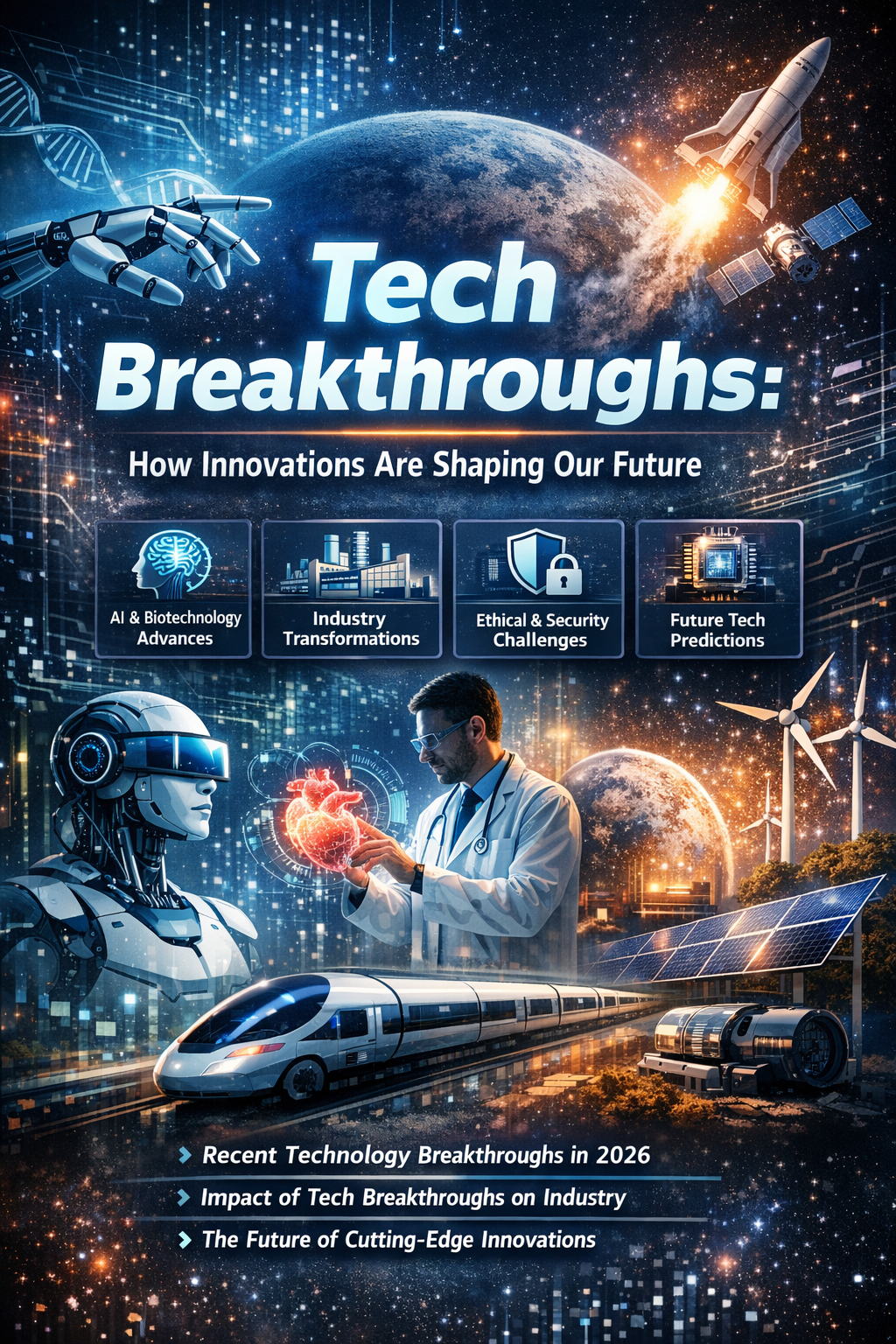
Technology has always been a driving force behind human progress, but in recent years, the pace of innovation has accelerated dramatically. Tech breakthroughs—major advancements that fundamentally change the way we live, work, and interact—are reshaping industries, improving quality of life, and opening doors to possibilities once thought impossible. From artificial intelligence that can diagnose diseases to renewable energy solutions combating climate change, the scope of modern technology breakthroughs is vast and transformative.
Understanding these breakthroughs is not just for tech enthusiasts or scientists; they affect everyone. Whether it’s the smartphone in your pocket, smart devices in your home, or cutting-edge medical treatments, breakthroughs in technology impact daily life, business efficiency, and global economies. In this article, we’ll explore the most significant tech breakthroughs, their real-world applications, challenges they pose, and what the future might hold for humanity as technology continues to evolve at a breathtaking pace.http://futuretechfrontier.com
Key Highlights You’ll Learn in This Article:
- What defines a technology breakthrough and how it differs from regular innovations.
- Recent tech breakthroughs that are shaping 2026 and beyond.
- The impact of technology breakthroughs across industries like healthcare, finance, education, and manufacturing.
- Challenges, ethical concerns, and risks associated with rapid technological progress.
- How to stay informed and prepare for the next wave of tech breakthroughs.
What Are Tech Breakthroughs?
At its core, a tech breakthrough is a significant technological advancement that dramatically changes how we solve problems, interact with the world, or perform tasks. Unlike small or incremental improvements, breakthroughs often redefine entire industries or create new markets altogether. For example, the invention of the internet in the 1990s was a tech breakthrough that transformed communication, commerce, and information access globally. Similarly, smartphones revolutionized how we communicate, work, and consume media.
Incremental Innovation vs. Breakthrough Technology
It’s important to differentiate between incremental innovation and breakthroughs. Incremental innovations are small, gradual improvements to existing technologies—like making a smartphone camera slightly better each year. Tech breakthroughs, on the other hand, are game-changing advancements that create entirely new capabilities. Examples include:
- Artificial Intelligence that can learn and adapt without explicit programming.
- Gene editing technologies like CRISPR, which allow precise manipulation of DNA.
- Quantum computing, which could solve complex problems far beyond traditional computers.
How Tech Breakthroughs Impact Daily Life
The influence of technology breakthroughs extends into nearly every aspect of daily life:
- Communication: Video calls, AI chatbots, and instant translation services.
- Healthcare: AI-driven diagnostics, wearable health monitors, and personalized medicine.
- Transportation: Electric and autonomous vehicles reducing travel time and emissions.
- Education: Virtual classrooms, AI tutors, and interactive learning platforms.
- Work and Productivity: Automation tools and cloud-based collaborative systems increasing efficiency.
These breakthroughs do not just make life more convenient—they reshape societal structures and create new opportunities for businesses and individuals.
Historic Examples of Tech Breakthroughs
Some of the most impactful breakthroughs in history demonstrate the transformative power of technology:
| Year | Technology Breakthrough | Impact |
|---|---|---|
| 1876 | Telephone | Revolutionized communication worldwide |
| 1928 | Penicillin | Changed medicine and saved millions of lives |
| 1969 | ARPANET / Internet | Laid the foundation for the digital age |
| 2007 | iPhone | Reshaped mobile technology and media consumption |
These examples show that tech breakthroughs are rarely isolated events; they often trigger cascading effects that change multiple aspects of society and industry.
Recent Tech Breakthroughs in 2026
The year 2026 is shaping up to be a pivotal moment for tech breakthroughs, with innovations across multiple fields transforming industries and everyday life. These advancements are not only improving efficiency and convenience but also tackling some of humanity’s most pressing challenges, from healthcare to climate change. Let’s explore the most significant recent technology breakthroughs making headlines today.
Artificial Intelligence and Machine Learning Breakthroughs
Artificial Intelligence (AI) continues to be at the forefront of tech breakthroughs. Modern AI systems are not only capable of analyzing massive datasets but can also predict trends, make decisions, and even create content. Key breakthroughs include:
- Generative AI tools that can write text, compose music, and design visuals.
- AI-driven healthcare diagnostics, which can detect diseases like cancer earlier and more accurately than traditional methods.
- Autonomous decision-making in business, enabling smarter supply chain management and personalized marketing strategies.
Case Study: Researchers at Stanford University developed an AI system that predicts cardiovascular risks from retinal scans, outperforming traditional diagnostic methods.
Robotics and Automation Innovations
Robotics breakthroughs are transforming both industrial and domestic spaces:
- Autonomous drones for delivery, agriculture, and disaster management.
- Collaborative robots (cobots) that work alongside humans in factories, enhancing productivity.
- Smart home robots that assist with cleaning, security, and elderly care.
These breakthroughs are reducing operational costs, increasing efficiency, and creating safer working environments.
Biotechnology and Healthcare Tech Breakthroughs
Healthcare has seen some of the most life-changing tech breakthroughs in 2026:
- CRISPR-based gene editing allows precise correction of genetic disorders.
- Personalized medicine uses genetic profiles to create targeted treatments for patients.
- Wearable health tech continuously monitors vitals, detects abnormalities early, and provides real-time feedback.
Fact: According to a 2025 Nature report, CRISPR therapies have successfully treated over 1,000 patients worldwide, marking a milestone in gene-editing applications.
Renewable Energy and Sustainability Tech
With climate change becoming a global priority, tech breakthroughs in sustainability are critical:
- Next-gen solar panels with over 40% energy conversion efficiency.
- Advanced battery storage technologies for electric vehicles and grids.
- Carbon capture innovations that remove CO₂ from the atmosphere at scale.
These innovations are helping countries transition to cleaner energy sources while reducing environmental impact.
Space Exploration and Advanced Transportation
The final frontier is witnessing remarkable breakthroughs:
- Private space travel is becoming more accessible, with companies like SpaceX and Blue Origin expanding commercial missions.
- Hyperloop and high-speed rail innovations promise ultra-fast, eco-friendly transportation solutions.
- Advanced satellites enhance global connectivity and disaster monitoring.
Quote: Elon Musk stated in 2025, “The next decade of space tech breakthroughs will redefine how humanity views its place in the cosmos.”
How Tech Breakthroughs Are Changing Industries
Tech breakthroughs are not just abstract innovations—they have tangible effects on industries, transforming how businesses operate, deliver value, and compete. From healthcare to finance, education, and manufacturing, these advancements are reshaping workflows, improving efficiency, and creating new opportunities for growth. Below, we explore how technology breakthroughs are revolutionizing key sectors.
Tech Breakthroughs in Healthcare
The healthcare industry has been profoundly impacted by tech breakthroughs, improving patient outcomes and reducing costs. Key advancements include:
- AI-Powered Diagnostics: AI algorithms can analyze medical images, detect anomalies, and predict diseases faster than traditional methods.
- Remote Surgery and Telemedicine: Robotic-assisted surgeries and virtual consultations expand access to healthcare globally.
- Wearable Health Devices: Smartwatches and health monitors continuously track vitals, alerting users and doctors to early warning signs.
Example: The FDA approved the first AI system capable of diagnosing diabetic retinopathy without a human doctor, marking a major breakthrough in eye care.
Tech Breakthroughs in Finance
Finance has also benefited from technology breakthroughs, enabling more secure, efficient, and personalized services:
- Blockchain and Cryptocurrencies: These technologies provide secure, transparent, and decentralized financial transactions.
- Fintech Innovations: Mobile banking, AI-driven investment tools, and algorithmic trading are reshaping personal and corporate finance.
- Fraud Detection Systems: AI identifies fraudulent patterns in real-time, protecting millions of users.
Fact: According to Statista, the global fintech market is expected to reach $324 billion by 2026, driven largely by AI and blockchain breakthroughs.
Tech Breakthroughs in Education
Education has been transformed through digital innovations, making learning more accessible and engaging:
- Virtual and Augmented Reality Classrooms: VR and AR create immersive learning experiences, from historical simulations to virtual lab experiments.
- AI Tutors and Personalized Learning: AI analyzes student performance to provide customized learning paths.
- Online Collaborative Tools: Platforms like Google Classroom and AI-assisted note-taking apps enhance remote learning and collaboration.
Quote: “Technology breakthroughs in education are bridging learning gaps and creating equal opportunities for students worldwide,” says UNESCO’s 2025 Education Report.
Tech Breakthroughs in Manufacturing
Manufacturing is experiencing a new industrial revolution driven by breakthroughs in automation and robotics:
- Smart Factories: IoT-connected machinery monitors production in real-time, reducing downtime and waste.
- 3D Printing Innovations: Advanced 3D printing allows rapid prototyping and on-demand production.
- Collaborative Robots (Cobots): Cobots work alongside humans, enhancing efficiency while maintaining safety.
Statistic: McKinsey reports that automation and smart manufacturing tech breakthroughs could increase global manufacturing productivity by up to 30% by 2030.
The Science Behind Tech Breakthroughs
Understanding tech breakthroughs requires looking at the science, research, and innovation processes that make them possible. Behind every transformative technology lies years of experimentation, testing, and collaboration between scientists, engineers, and innovators. By examining how breakthroughs are discovered, we can appreciate not just the results but the process that drives technological progress.
How Breakthroughs Are Developed
Tech breakthroughs often start with a problem that existing technologies cannot solve. Researchers identify gaps and use experimentation, prototyping, and data analysis to develop new solutions. The process typically involves:
- Basic Research: Exploring new scientific concepts without immediate commercial applications.
- Applied Research: Testing theories in real-world conditions to develop functional prototypes.
- Innovation and Commercialization: Scaling the solution for industry use, often requiring partnerships with companies or venture capital.
Example: Quantum computing started as a theoretical concept in physics but has evolved into practical breakthroughs through decades of research and experimentation.
The Role of Artificial Intelligence in Driving Breakthroughs
AI itself has become a key enabler of technology breakthroughs. Modern AI can process massive datasets, identify patterns humans might miss, and even suggest new hypotheses for scientific exploration. Examples include:
- Drug Discovery: AI algorithms can predict molecular interactions, reducing drug development time from years to months.
- Material Science: AI models help discover new materials for batteries, semiconductors, and renewable energy solutions.
- Predictive Analytics: AI identifies emerging tech trends by analyzing global research publications, patents, and startups.
Collaboration Between Industries and Universities
Many breakthroughs occur through collaboration between academic institutions and industries. Universities often lead basic research, while industries provide funding, infrastructure, and real-world testing environments. Notable examples include:
- MIT and Moderna: Collaboration led to rapid mRNA vaccine development.
- Stanford AI Lab and Tech Startups: Partnered to develop cutting-edge AI diagnostics and robotics.
The Importance of Funding and Patents
Scientific breakthroughs require significant investment. Venture capital, government grants, and corporate funding are critical to turning ideas into functional technologies. Patents also protect innovations, encouraging inventors and companies to continue developing breakthrough technologies.
Fact: According to WIPO (World Intellectual Property Organization), the number of patent applications in AI and biotech increased by over 35% from 2020 to 2025, reflecting the rapid pace of tech breakthroughs.
Challenges and Risks of Tech Breakthroughs
While tech breakthroughs bring incredible benefits, they also come with significant challenges and risks. Rapid innovation can create ethical dilemmas, social disruption, and unintended consequences if not managed carefully. Understanding these challenges is essential for businesses, policymakers, and individuals navigating the modern technological landscape.
Ethical and Social Implications
Many tech breakthroughs raise ethical questions:
- Artificial Intelligence Bias: AI systems trained on biased datasets can make unfair or discriminatory decisions.
- Genetic Engineering: CRISPR and other biotech breakthroughs create moral debates over “designer babies” and human gene modification.
- Autonomous Machines: Self-driving cars and delivery drones pose dilemmas about responsibility in accidents.
Example: In 2025, an autonomous delivery drone caused a collision in a busy city street, highlighting the need for ethical regulations and safety protocols in robotics.
Privacy and Data Security Concerns
As technologies like AI, IoT, and smart devices collect massive amounts of personal data, privacy risks escalate:
- Unauthorized access to sensitive data.
- AI systems potentially manipulating user behavior.
- Cyberattacks targeting healthcare, finance, and infrastructure.
Fact: According to a 2025 report by Cybersecurity Ventures, global cybercrime costs are projected to reach $12.5 trillion annually by 2026, partly driven by increased adoption of connected technologies.
Job Displacement Due to Automation
Automation and robotics, while increasing productivity, also disrupt traditional employment:
- Manufacturing jobs replaced by AI-powered machinery.
- Routine administrative roles automated in finance and healthcare.
- New skill requirements emerge, creating a skills gap in the workforce.
Statistic: McKinsey predicts that by 2030, up to 30% of tasks across industries could be automated, emphasizing the importance of reskilling programs.
Environmental Impact
Some tech breakthroughs, particularly in electronics and industrial automation, have environmental consequences:
- Increased electronic waste from frequent tech upgrades.
- Energy-intensive AI and data centers contributing to carbon emissions.
- Resource extraction for advanced batteries and semiconductors.
However, other breakthroughs, like renewable energy technologies and carbon capture innovations, are actively mitigating environmental risks, showing that technology can both cause and solve ecological challenges.
Comments are closed, but trackbacks and pingbacks are open.